Buy ardglass.eu ?
We are moving the project
ardglass.eu .
Are you interested in purchasing the domain
ardglass.eu ?
domain@kv-gmbh.de · 0541-91531010
Buy ardglass.eu ?
Are humans apes?
Yes, humans are classified as apes. Apes are a group of primates that includes humans, chimpanzees, gorillas, orangutans, and bonobos. Humans share a common ancestor with these other apes and are considered part of the same biological family, Hominidae. Therefore, humans are considered to be a type of ape. **
Why are there so many intelligent apes in Planet of the Apes?
In the Planet of the Apes franchise, the intelligent apes are a result of a fictional scenario where apes have evolved to possess human-like intelligence and abilities. This is often attributed to a virus that was created in a lab and accidentally spread to the ape population, leading to their rapid evolution. The story explores the consequences of this evolution and the power dynamics between humans and apes. The presence of intelligent apes serves as a central theme in the franchise, allowing for a thought-provoking exploration of societal and ethical issues. **

Similar search terms for Apes
Top-Angebote
Products related to Apes:
-
Inspire Curations Hawaiian Nautical Fishing Net Wall Decor Ocean Theme Party & Coastal Home Accent Hawaiian Nautical Fishing Net Wall Decor Ocean Theme Party & Coastal Home AccentTransform any space into a breezy seaside escape with this stunning Fishing Net Wall Decor. Inspired by coastal living and island vibes, it instantly adds texture and character to your walls or event setup. Whether you're styling a beach party,...63,00 $*Shipping: 0,00 $Secure redirect to the provider
-
Uplift Picks Nautical Fishing Net Wall Decor Beach Theme Hanging For Coastal Home Styling Nautical Fishing Net Wall Decor Beach Theme Hanging For Coastal Home StylingBring the relaxing vibe of the ocean into your space with this charming fishing net wall decor designed for coastalinspired interiors. Perfect for beach lovers, party hosts, or anyone looking to add a seaside touch, this piece instantly transforms...76,99 $*Shipping: 0,00 $Secure redirect to the provider
-
Inspired Finds Nautical Fishing Net Wall Hanging Coastal Beach Party Decor Hawaiian Pirate Theme Nautical Fishing Net Wall Hanging Coastal Beach Party Decor Hawaiian Pirate ThemeTurn any space into a seaside escape with this versatile fishing net wall decor inspired by coastal living and ocean adventures. Whether you're styling a party or refreshing your room, this nautical wall hanging instantly brings a relaxed beach...34,99 $*Shipping: 0,00 $Secure redirect to the provider
-
Bumbleride Era Stroller + Bassinet Bundle - Maritime / MaritimeFeaturing an infant-safe, reversible seat to bond with your precious cargo until theyre ready to adventure facing forward. The Bumbleride Era has all-wheel suspension and air-filled tires giving you a smooth, one-handed push on city streets or bumpy...798,40 $*Shipping: 0,00 $Secure redirect to the provider



-
Which great apes are there?
There are four species of great apes: gorillas, orangutans, chimpanzees, and bonobos. **
-
Do humans descend from apes?
Humans and apes share a common ancestor, but humans did not directly descend from modern apes. The evolutionary path of humans and apes diverged millions of years ago, leading to the development of distinct species. While humans and apes share similarities due to their common ancestry, they are separate branches on the evolutionary tree. **
-
Does man descend from apes?
No, humans and apes share a common ancestor but do not directly descend from apes. The theory of evolution suggests that humans and apes evolved separately from a common ancestor over millions of years. Both humans and apes have evolved and adapted to their environments in different ways, leading to the distinct species we see today. **
-
Did we descend from apes?
No, humans did not directly descend from apes. Both humans and apes share a common ancestor that lived millions of years ago. Through the process of evolution, humans and apes have evolved separately, each developing unique traits and characteristics. While humans and apes are closely related, they are distinct species with their own evolutionary paths. **


Did humans descend from apes?
Humans and apes share a common ancestor, but humans did not directly descend from modern apes. The common ancestor of humans and apes lived around 5 to 7 million years ago, and from there, the evolutionary paths of humans and apes diverged. Humans evolved separately from this common ancestor, developing unique traits and characteristics that distinguish us from modern apes. Therefore, while humans and apes are closely related, humans did not descend from modern apes. **
Did humans evolve from apes?
No, humans did not evolve directly from apes. Instead, humans and apes share a common ancestor that lived millions of years ago. Over time, this common ancestor branched off into different species, with some evolving into modern-day apes and others into modern-day humans. This process of evolution resulted in the diversity of life we see on Earth today. **
Top-Angebote
Products related to Apes:
-
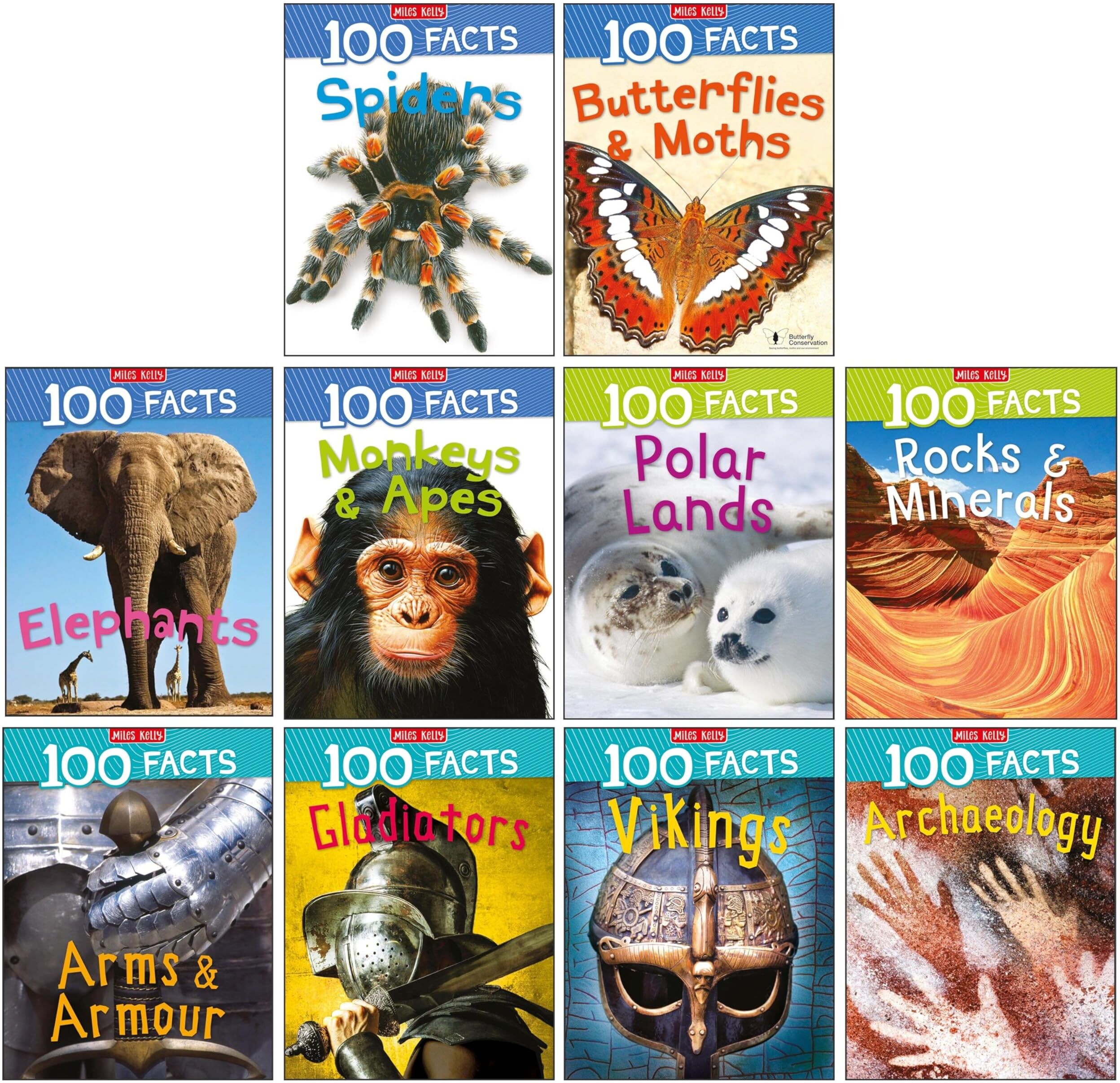
Miles Kelly Publishing 100 Facts Series 10 Books Collection Set (100 Facts: Spiders, Butterflies and Moths, Elephants, Monkeys and Apes, Polar Lands, Rocks and Minerals, ArmTitles in this Set: 1. 100 Facts Spiders 2. 100 Facts Butterflies and Moths 3. 100 Facts Elephants 4. 100 Facts Monkeys and Apes 5. 100 Facts Polar Lands 6. 100 Facts Rocks and Minerals 7. 100 Facts Arms & Armour 8. 100 Facts Gladiators 9. 100 Facts Vikings 10. 100 Facts Archaeology Description: 100 Facts Spiders 100 Facts Spiders is bursting with fascinating images, fun activities and amazing facts all about these eight-legged creatures. Kids learn more easily with bitesized information Photographs and artworks aid children who learn through visual prompts Activities allow children to put what they have learned into practice 100 Facts Spiders includes key topics about many species of arachnids with exciting numbered facts. Each fact is accompanied by beautiful illustrations and photographs, which add visual meaning to the information for kids. This is a fantastic spider book for kids aged 7+ who are intrigued by these creepy crawlies. 100 Facts Butterflies and Moths 100 Facts Butterflies and Moths is a top butterfly book packed with 100 fantastic facts, detailed images and super-fun activities. Close-up photos bring butterflies, moths and caterpillars to life on the page Supports education at key stage 1 and key stage 2 Fun activities and facts throughout to help the information seem less daunting 100 Facts Butterflies and Moths covers key topics in interesting numbered facts. Amazing information alongside clear illustrations and photographs put mind-blowing facts into context for young learners. This butterfly book for children is perfect for school projects, homework and simply discovering more about what's in the garden. 100 Facts Elephants 100 Facts Elephants is bursting with detailed images, activities and exactly 100 amazing facts for children to learn about the biggest land-living creatures in the world. Simple activities help children put difficult ideas into context Looks at different elephant species and where they live Cartoons and fun facts add humour to learning 100 Facts Elephants contains key topics about the extraordinary lives of elephants in straightforward numbered facts. Each fact is accompanied by beautiful illustrations and photographs, which add visual meaning to the information for kids. This elephant book for kids aged 7+ years is ideal for school projects and homework. 100 Facts Monkeys and Apes 100 Facts Monkeys and Apes is bursting with fantastic images, fun activities and awesome primate facts for kids. Kids learn more easily with bitesized information Photographs and artworks aid children who learn through visual prompts Activities allow children to put what they have learned into practice 100 Facts Monkeys and Apes covers key topics about our closest animal relatives in interesting numbered facts. Information is accompanied by amazing illustrations and photographs that put unbelievable facts into context for children. Our monkey books for kids are great for school projects and homework. 100 Facts Polar Lands 100...12,95 £*Shipping: 2,99 £Secure redirect to the provider
-
Inspire Essentials Coastal Fishing Net Wall Decor For Beach Theme Home And Party Styling Coastal Fishing Net Wall Decor For Beach Theme Home And Party StylingBring the relaxed charm of the seaside into your space with this beautifully styled fishing net wall decor designed to create an authentic coastal vibe. Inspired by ocean life and beachside living this piece instantly transforms any wall into a...34,98 $*Shipping: 0,00 $Secure redirect to the provider
-
Inspire Curations Hawaiian Nautical Fishing Net Wall Decor Ocean Theme Party & Coastal Home Accent Hawaiian Nautical Fishing Net Wall Decor Ocean Theme Party & Coastal Home AccentTransform any space into a breezy seaside escape with this stunning Fishing Net Wall Decor. Inspired by coastal living and island vibes, it instantly adds texture and character to your walls or event setup. Whether you're styling a beach party,...63,00 $*Shipping: 0,00 $Secure redirect to the provider
-
Uplift Picks Nautical Fishing Net Wall Decor Beach Theme Hanging For Coastal Home Styling Nautical Fishing Net Wall Decor Beach Theme Hanging For Coastal Home StylingBring the relaxing vibe of the ocean into your space with this charming fishing net wall decor designed for coastalinspired interiors. Perfect for beach lovers, party hosts, or anyone looking to add a seaside touch, this piece instantly transforms...76,99 $*Shipping: 0,00 $Secure redirect to the provider
-
Are humans apes?
Yes, humans are classified as apes. Apes are a group of primates that includes humans, chimpanzees, gorillas, orangutans, and bonobos. Humans share a common ancestor with these other apes and are considered part of the same biological family, Hominidae. Therefore, humans are considered to be a type of ape. **
-
Why are there so many intelligent apes in Planet of the Apes?
In the Planet of the Apes franchise, the intelligent apes are a result of a fictional scenario where apes have evolved to possess human-like intelligence and abilities. This is often attributed to a virus that was created in a lab and accidentally spread to the ape population, leading to their rapid evolution. The story explores the consequences of this evolution and the power dynamics between humans and apes. The presence of intelligent apes serves as a central theme in the franchise, allowing for a thought-provoking exploration of societal and ethical issues. **
-
Which great apes are there?
There are four species of great apes: gorillas, orangutans, chimpanzees, and bonobos. **
-
Do humans descend from apes?
Humans and apes share a common ancestor, but humans did not directly descend from modern apes. The evolutionary path of humans and apes diverged millions of years ago, leading to the development of distinct species. While humans and apes share similarities due to their common ancestry, they are separate branches on the evolutionary tree. **
Similar search terms for Apes
-
Inspired Finds Nautical Fishing Net Wall Hanging Coastal Beach Party Decor Hawaiian Pirate Theme Nautical Fishing Net Wall Hanging Coastal Beach Party Decor Hawaiian Pirate ThemeTurn any space into a seaside escape with this versatile fishing net wall decor inspired by coastal living and ocean adventures. Whether you're styling a party or refreshing your room, this nautical wall hanging instantly brings a relaxed beach...34,99 $*Shipping: 0,00 $Secure redirect to the provider
-
Bumbleride Era Stroller + Bassinet Bundle - Maritime / MaritimeFeaturing an infant-safe, reversible seat to bond with your precious cargo until theyre ready to adventure facing forward. The Bumbleride Era has all-wheel suspension and air-filled tires giving you a smooth, one-handed push on city streets or bumpy...798,40 $*Shipping: 0,00 $Secure redirect to the provider
-
Uplift Curations Naval Fishing Net Wall Hanging Coastal Beach & Pirate Theme Decor For Home & Party Naval Fishing Net Wall Hanging Coastal Beach & Pirate Theme Decor For Home & PartyTurn any space into a breezy coastal escape with this stunning fishing net wall decor. Inspired by authentic seaside styling, this nautical wall hanging instantly adds texture, depth, and ocean charm to your walls. Whether you're decorating for a...65,00 $*Shipping: 0,00 $Secure redirect to the provider
-
Inspire Picks Nautical Fishing Net Wall Decor Coastal Marine Hanging Ornament shellBring seaside charm into your space with this stylish nautical fishing net decor. Inspired by coastal living, it adds texture and character while creating a relaxed, oceaninspired vibe. Perfect for beach lovers and creative decorators, this marine...34,93 $*Shipping: 0,00 $Secure redirect to the provider
-
Does man descend from apes?
No, humans and apes share a common ancestor but do not directly descend from apes. The theory of evolution suggests that humans and apes evolved separately from a common ancestor over millions of years. Both humans and apes have evolved and adapted to their environments in different ways, leading to the distinct species we see today. **
-
Did we descend from apes?
No, humans did not directly descend from apes. Both humans and apes share a common ancestor that lived millions of years ago. Through the process of evolution, humans and apes have evolved separately, each developing unique traits and characteristics. While humans and apes are closely related, they are distinct species with their own evolutionary paths. **
-
Did humans descend from apes?
Humans and apes share a common ancestor, but humans did not directly descend from modern apes. The common ancestor of humans and apes lived around 5 to 7 million years ago, and from there, the evolutionary paths of humans and apes diverged. Humans evolved separately from this common ancestor, developing unique traits and characteristics that distinguish us from modern apes. Therefore, while humans and apes are closely related, humans did not descend from modern apes. **
-
Did humans evolve from apes?
No, humans did not evolve directly from apes. Instead, humans and apes share a common ancestor that lived millions of years ago. Over time, this common ancestor branched off into different species, with some evolving into modern-day apes and others into modern-day humans. This process of evolution resulted in the diversity of life we see on Earth today. **
* All prices are inclusive of VAT and, if applicable, plus shipping costs. The offer information is based on the details provided by the respective shop and is updated through automated processes. Real-time updates do not occur, so deviations can occur in individual cases. ** Note: Parts of this content were created by AI.